
"coffee plant factors"
5000 article(s) found

Flavor characteristics, producing areas and brewing parameters of Peruvian Coffee
Exchange of professional baristas Please pay attention to the coffee workshop (Wechat official account cafe_style) Peruvian coffee single bean flavor characteristics, production areas and brewing parameters Peruvian coffee is grown in a planned way, resulting in a great increase in coffee production. Its rich acidity and mellow smoothness are its most prominent features. Peruvian coffee has a soft sour taste, medium texture, taste and aroma

Factors affecting the packaging of coffee beans the purpose of selecting the type of packaging
When the baking is finished, the coffee will be ready to use. It is important to pack it as soon as possible to avoid the loss of aroma and keep it fresh. After contact with the air, the water and oxygen in the air accelerate the oxidation process, making the quality of coffee worse. Factors affecting packaging Packaging is an important and careful process, which can protect coffee from the following factors: 1. Environment: coffee will change when in contact with air.
Peruvian coffee single bean species, brand recommendation and manor introduction
Professional barista exchanges please follow the coffee workshop (Wechat official account cafe_style) Peruvian coffee single bean types, brand recommendation and manor introduction as a rising star in the coffee industry, Peruvian coffee is gradually opening up its popularity and entering the international market. Peruvian coffee has always been used as one of the stable and mellow mixed beans of comprehensive coffee. Peruvian coffee has a mellow taste and proper acidity.

How do you drink Nicaraguan sunburn Vera Saatchi coffee? Introduction of planting varieties in Buenos Aires Manor
Professional coffee knowledge exchange more coffee bean information please pay attention to the coffee workshop (Wechat official account cafe_style) the growing conditions in Nicaragua are not inferior to those in Central American countries, grown in shaded coffee at high elevations, round and balanced with less sharp acidity, the main unknown factors are war and hurricanes, resulting in the unsustainable operation of a single farm and no historical data.
Boutique Coffee all kinds of common sense about fine coffee
It was said before that among the factors that affect the taste of a cup of coffee, raw beans account for 60%, roasting accounts for 30%, and production accounts for 10%. This is a general analysis, so throughout the life process of coffee beans, the factors that from crop to cup affects the taste of a cup of coffee can be infinitely refined. The first is the variety. Sow melon, reap beans, no matter whether it is to plant melons or beans, seed selection is the most important, of course I
Grading, price, raw beans and baking curve of Peruvian coffee
For the exchange of professional baristas, please pay attention to the coffee workshop (Wechat official account cafe_style) Peruvian coffee bean classification, price, raw beans and roasting curve Peruvian coffee beans, which are most famous for the coffee beans produced in Mayou in the middle and Cusco in the south. In addition, there are also some regions in northern Peru that produce characteristic organic coffee. Organic coffee is grown in the shade of trees.
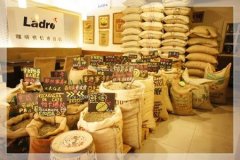
Factors to be considered when choosing raw coffee beans
You can see how carefully coffee beans are processed by observing their appearance. Here are 10 factors to consider when choosing raw coffee beans.
General knowledge of coffee bean grading A brief introduction to the grading system of coffee beans in Ethiopia
In this age of flamboyant clothes, beautiful masks and expensive silicone, Egyptian beans are obviously not the kind of people who can't resist your appearance. The long and thin bean shape, coupled with its uneven size, always feels a little born with stunting. Fortunately, God is fair, and the Egyptian beans without outstanding appearance have rich connotations (so do many ugly people.

The rich smell of Columbia exquisite boutique coffee beans planting geographical location, climate, altitude is simple
The annual temperature there is about 18 degrees Celsius, the annual rainfall is 2000 to 3000 mm, latitude 1-11 15 north, longitude 72-78 west, the specific range can exceed 2.000 meters above sea level. By a special combination of factors, the latitude, altitude, soil, plant origin of species and varieties of coffee in the coffee growing areas of Colombia, the climate and tropics of the coffee growing areas

Description of flavor and aroma characteristics of boutique coffee beans at Los Congo Manor in Nicaragua
The planting conditions in Nicaragua are not inferior to those in Central American countries. Shaded coffee is grown at high altitudes. It tastes round and balanced with less sharp acid. The main unknown factor is war and hurricanes, which make a single farm unsustainable. There is no historical data for raw bean merchants to track and check farm data until after 2003, the bad factors of coffee quality are removed and backward intercourse.

Hougu Coffee: Yunnan's Most Complete Coffee Industry Chain
According to Yang Aijun, deputy director of Dehong Prefecture Specialty Office, every time the state party committee and state government develop an industry, in order to ensure industrial safety, they will consider four factors: one is the immediate interests of farmers; the second is the development prospect of the market; the third is the driving force of leading enterprises; and the fourth is whether farmers are willing to plant. Among them, it is very important to choose leading enterprises, not only to have strength but also to have a sense of responsibility.

Coffee Flavor factors affecting Coffee Flavor
Professional coffee knowledge exchange more information about coffee beans Please follow the coffee workshop (Wechat official account cafe_style) A cup of good coffee, 60% depends on the quality of raw beans. As a coffee practitioner, we should open up the pattern and learn more about the whole link of "From Seed To Cup" as much as possible. This is helpful to the link you are engaged in. After all, bakers bake according to the nature of beans.
Technology and Environmental factors of growing Coffee in Coffee Garden
Coffee comes from Ethiopian curry. In Colombia, it was brought by a priest from the French Antilles via Venezuela in 1808. At present, Colombia is the fourth largest coffee producer in the world, behind Brazil, Vietnam and Indonesia. There are four types of coffee trees in the world, namely, ARABICA, ROBUSTA and LIBERICA.

Panamanian Coffee Manor Caesar Louis Manor Variety planting in Panamanian Coffee Manor A brief introduction to Climate and altitude
Another important factor is that the microclimate in the Poquet Heights of Panama is a unique and important resource for boutique coffee in the Pokuit region; this is the east-to-west environment of Panama that allows cold air to converge above 6500 feet through the Central Mountains, which creates a variety of microclimates in the Pokuit region, making its temperature and rainfall very suitable for plant growth.

A brief introduction to the description of flavor and aroma characteristics of glossy Kenyan boutique coffee beans
Compared with shading planting in many high-quality producing areas, Kenyan coffee is obviously more spicy and unrestrained, and shade trees are not common. In addition, Kenyan coffee rarely participates in certification, variety and environmental factors make the use of pesticides necessary, and organic certification, which is popular in other countries, becomes rare in Kenya. Kenya coffee harvest season there are two harvest seasons in Kenya, the main harvest
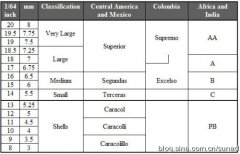
10 factors to consider when selecting raw coffee beans
The raw bean seller is mainly responsible for grading the coffee beans before selling them to the coffee bean merchant. After the grading is completed, premium coffee beans and boutique coffee beans will be selected, although they will have some defects but do not affect the coffee rating. These defects are not so serious, but they can also cause potential damage to the quality of coffee. Although Cupping is undoubtedly the most definite way to check coffee beans.
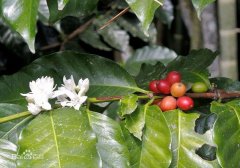
Income of coffee farmers grown in shade coffee tree Arabica coffee beans
First of all, there are some reasons why shade planting has become an advantage. When coffee is planted in the shade of other vegetation, biodiversity provides favorable conditions for its growth. Native plants that provide shade for coffee range from forest plants such as cedar to fruit trees such as banana, orange, lemon, avocado and litchi.

The flavor of coffee beans and several decisive factors
Professional coffee knowledge exchange more coffee bean information please follow the coffee workshop (Wechat official account cafe_style) a cup of delicious coffee, raw bean quality determines 60% of this cup of coffee, roasting determines 30%, brewing determines 10%. The quality of raw beans determines its upper limit, baking determines the appearance of beans, and cooking determines its lower limit. As a coffee practitioner, we should let go.
Coverage factors of Kona Coffee
The environment requires soil: the fertile tropical Hawaiian volcanic soil provides the dense nutrients of the Kona Coffee Tree. Altitude: the appropriate altitude of 2100 to 3600 meters and the cool moonlight promote the fruit of Kona Coffee to ripen slowly and create an excellent taste with rich appearance and full moisture. Rizhao: the warm tropical sun is one of the breeds of coffee trees

Coffee knowledge | effect of altitude on coffee | the higher the altitude, the better the coffee?
Like wine, beer and tea, the way coffee beans grow can greatly affect the taste of the cup you end up drinking. There are many factors that affect the quality of coffee beans, but none is more important than the growth of coffee beans. To understand why altitude has such a great effect on the flavor of coffee beans, we must study plant biology in depth. Usually, the higher the altitude,